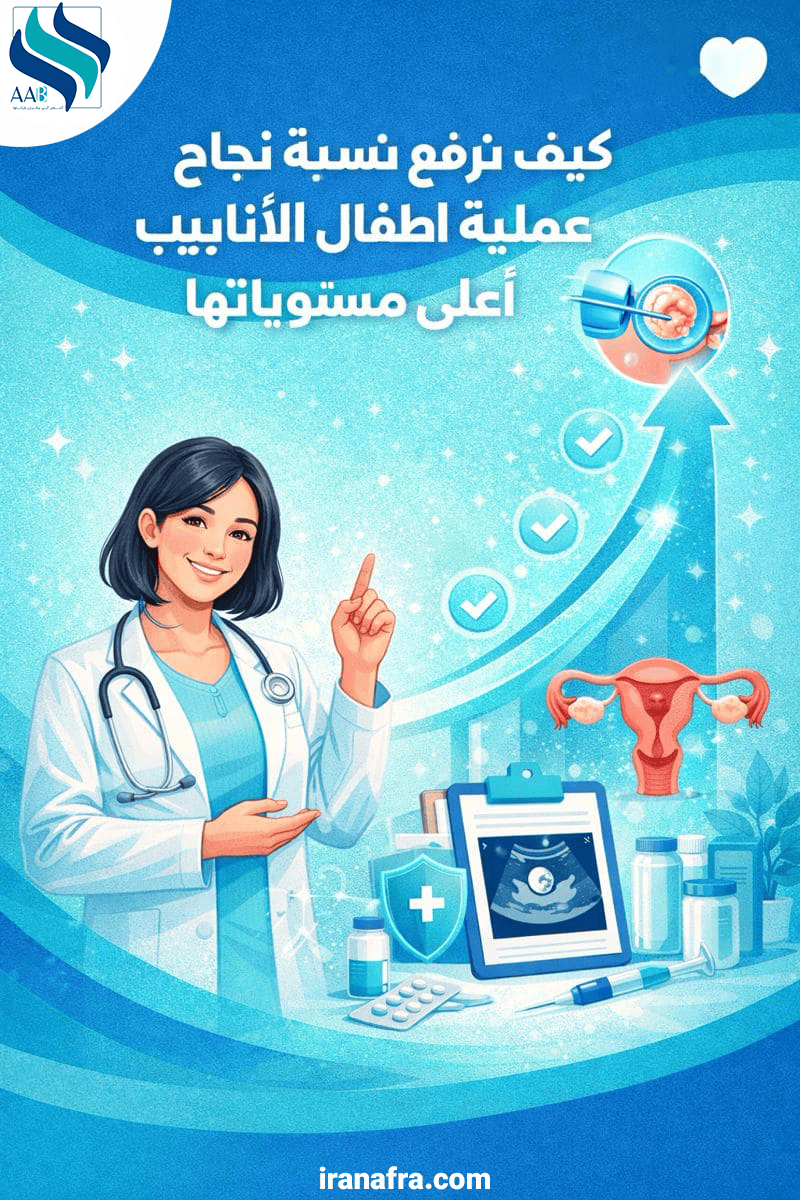
The comprehensive medical basis for increasing the success rate of IVF children step by step
An extensive scientific article explains the biological, genetic, immunologic factors and modern techniques that are effective in pregnancy success
Introduction: Why don’t the results of al-Haqqan al-Mujahri depend on chance?
In vitro fertilization (IVF) and intrauterine injection (ICSI) are the most complex medical procedures in the field of reproductive medicine, as the results do not depend on a single factor, but are influenced by a series of factors, starting with the quality of the reproductive cells and ending with the ability of the endometrium to receive the embryo.
In modern medicine, the goal is no longer just the occurrence of fertilization, but reaching a genetically healthy fetus capable of implantation and continuation. Therefore, advance planning strategies, precision medicine, and advanced information technologies have become indispensable elements.
International statistics indicate that the average success rate ranges between 35% and 50% for women under the age of 35, but this rate can be significantly improved if a comprehensive and specific treatment plan is used for each individual case.
The first stage: the golden preparation before the operation (90 days of separation)
The maturation period of the egg and spermatozoa lasts for several weeks before fertilization. During this period, it is possible to improve the cellular environment and reduce the genetic errors that directly affect the quality of the embryos.
Improving the quality of oocytes: the cornerstone
- CoQ10 (ubiquinol): supports the mitochondria responsible for the production of energy inside the egg, and helps reduce chromosomal division disorders.
- Vitamin D: an essential element for regulating the immune response and improving the acceptance of the endometrium of the fetus.
- DHEA: It is useful for some women with low ovarian reserve, but its use must be strictly under medical supervision.
The masculine factor: half of the neglected equation
- Focusing on antioxidants to reduce DNA damage.
- Avoid smoking and high heat.
- Followers of an active lifestyle with regular sleep.
The second stage: How to improve the modern technology of Nasab-e-Najah?
Technological progress in embryo laboratories is changing the rules of the game. Selection is no longer based on shape only, but on genetic analysis and precise biological timing.
- PGT-A: to detect genetically healthy embryos and reduce the risk of miscarriage.
- Embryoscope: to observe the development of the embryo without exposure to environmental changes.
- ERA Test: to accurately determine the best timing of embryo transfer.
- PRP: to improve the thickening of the endometrium and activate the ovaries.
The journey of motherhood begins with the right plan
In “Iran Afra” we believe that every situation is unique, and that true success is achieved when science, experience, and human support come together in a clear and safe path.