The state of sleep after returning to the wombs: a comprehensive scientific evidence for the journey of Najah al-Haqqan al-Mujahri
From Al-A to Al-Ilya: How the quality of Nomak contributes to increasing the chances of embryo implantation and achieving motherhood
The waiting stage: anxiety, hope, and the question of sleep
After a healing journey full of hope and anticipation, the decisive moment comes: the return of the wombs. Here begins the stage of “Al-Asbu’in al-Masirein”, which is a period full of conflicting feelings of confusion and confusion. In the midst of these feelings, there are endless questions about what should be done and what should be avoided to ensure the success of the process. Perhaps most of these questions are urgent and repeated: “How should I sleep? Does my condition increase my chances of embryo implantation?”.
The source of this question is a deep desire to do everything possible to achieve the dream of motherhood. A lot of advice and inaccurate information are published on the Internet, which makes me wonder and worry women. In this comprehensive article, we delve into the depths of science to provide accurate and detailed answers, and distinguish between superstitions and medical facts. Our goal is to provide you with the knowledge that gives you peace of mind and confidence to make the right decisions, knowing that the most important thing is the sleep position in itself, the quality of sleep and the depth of relaxation that your body needs in this delicate phase.
!
Why is good sleep considered the cornerstone in the success of Engras al-Janein?
Before delving into the details of sleep conditions, it is necessary to understand the vital biological role that plays a deep and comfortable sleep in preparing the body for the implantation process. Sleep is not just a period of rest, but a complex physiological process during which crucial hormonal and nervous changes occur.
1. Regulation of hormones: Miftah al-Awam al-Hawqor
- Progesterone: It is called “pregnancy hormone”, and it is responsible for preparing the lining of the uterus to receive the fetus. Lack of sleep increases the levels of cortisol hormone (stress hormone), which can interfere with the production of progesterone, which negatively affects the quality of the endometrium.
- Melatonin: Not only does this hormone regulate the sleep and wake cycle, but it is also a strong antioxidant that protects the oocytes and the embryo from oxidative stress, improves the quality of the oocytes and supports the implantation process.
- Leptin and ghrelin hormones: lack of sleep disrupts the balance of these hormones responsible for hunger and satiety, which may lead to inflammation and weight gain, both of which have a negative effect on fertility.
2. Enhancing blood flow to the womb
During deep sleep, the body relaxes and the resistance of blood vessels decreases, which allows blood to flow more efficiently to all organs, including the uterus. This improved flow ensures the delivery of sufficient oxygen and nutrients to the endometrium, which creates an ideal and rich environment for the reception of the fetus and helps it to implant and grow.
3. Supporting the immune system
Embryo implantation is a complex immune process, where the mother’s body has to “accept” the embryo that carries different genetic material. Good sleep helps to regulate the response of the immune system, and prevents the occurrence of an excessive immune reaction that attacks the fetus and hinders conception.
Sleep conditions: We are the teachers of science and medicine
The good news is that there is no conclusive scientific study to prove that a certain sleeping position guarantees success, or that another position causes failure. Comfort and reducing the pressure on the abdominal area are the main sources. However, there are medical recommendations based on understanding the anatomy of the body and blood circulation.
Al-Musiyabah (because it supports blood circulation)
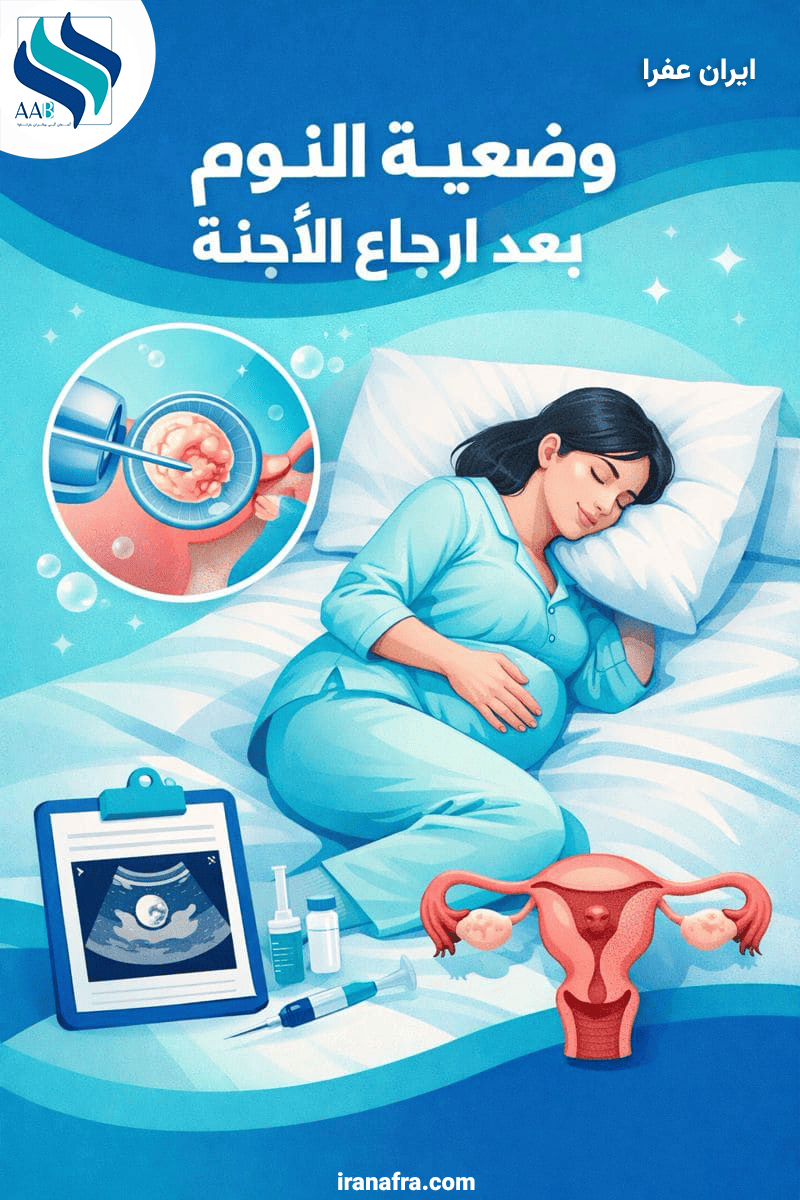
1. Sleeping on the left side: This position is considered the “golden standard” during pregnancy in general, and it is strongly recommended after delivery. The reason is purely anatomical; The inferior vena cava, which is the main vein that carries blood from the lower part of the body to the heart, is located on the right side of the spine. Sleeping on the left side puts the weight of the uterus away from the vein, which allows the blood to flow freely and without any pressure, and this increases the efficiency of the blood circulation reaching the uterus and the fetus.
2. Sleeping on the back: It is a good and comfortable position for many people. Ensuring the distribution of body weight evenly without assuming excessive pressure on the abdomen. To improve this position, a small pillow can be placed under the knees to reduce pressure on the lower back and improve relaxation.
The situation to avoid (as a precaution)
Sleeping on your stomach: Although the uterus is well protected within the pelvis in the early stages, sleeping on your stomach puts direct mechanical pressure on the abdomen and uterus. As a precaution, and to ensure the best possible blood flow, all doctors recommend avoiding this position altogether during the waiting period. Don’t panic if you wake up and find yourself on your stomach; the body is intelligent and will naturally change position. However, try to start sleeping on your left side or back.
⚠️ Important warning: Don’t make it an obsession!
The most important message to keep in mind during this time is: your comfort comes first! Excessive worry about your sleeping position can cause insomnia and anxiety, which is more detrimental than the position itself. If you’re used to sleeping on your right side, that’s perfectly fine. Switching between your right and left sides and sleeping on your back is also perfectly normal. The goal is to get 7-9 hours of restful, uninterrupted sleep.
Golden tips for deep and restful sleep after embryo transfer
Since sleep quality is paramount, here are practical and scientifically proven strategies to improve your sleep during this crucial period:
1. Creating an ideal sleep ritual and environment
• Complete darkness: Use blackout curtains or a sleep mask. Darkness stimulates melatonin production.
• Calm: Use earplugs or a “white noise” device to block out annoying sounds.
• Moderate temperature: Keep the bedroom cool, as high temperatures hinder sleep.
• Avoid screens: The blue light emitted from phones and tablets suppresses melatonin. Stop using them at least an hour before bedtime.
2. Relaxation and anxiety-fighting techniques
• Deep breathing: Before going to sleep, lie down comfortably and take a deep breath in through your nose for 4 seconds, hold your breath for 7 seconds, then exhale slowly through your mouth for 8 seconds. Repeat this exercise 5-10 times.
• Guided meditation: Listen to guided meditation recordings for relaxation and stress reduction, which are widely available on the internet.
• Warm bath: A warm (but not too hot) bath an hour before bedtime helps to relax muscles and lower body temperature, making it easier to fall asleep.
3. A sleep-friendly diet
• Avoid caffeine and sugars: Stay away from coffee, tea, soft drinks and chocolate, especially in the evening.
• A light dinner: Eat a light dinner 2-3 hours before bedtime to avoid indigestion.
• Sleep-inducing foods: You can have a cup of warm milk or a small handful of almonds, as they contain substances that help with relaxation.
4. Moderate physical activity (after consulting a doctor)
Complete inactivity is unnecessary and may even increase stress. A light 15-20 minute walk outdoors during the day can improve mood, reduce anxiety, and help regulate sleep patterns. Be sure to get your doctor’s approval first.
The most common questions about sleep after embryo transfer
1. Do I have to stay in bed for the entire two weeks?
No, this is a common myth. Rest is necessary on the first day, but complete inactivity is not recommended. Light movement and walking promote blood flow to the uterus and reduce the risk of blood clots. Follow your doctor’s instructions carefully.
2. I suffer from severe insomnia due to anxiety. Does this mean my operation will fail?
It’s perfectly normal to feel anxious and restless. A night or two of disrupted sleep won’t significantly affect the outcome. The important thing is not to give in to anxiety. Try the relaxation techniques mentioned above. If the insomnia persists, talk to your doctor; they may suggest safe solutions.
3. Is using extra pillows helpful?
Yes, it can be very helpful. When sleeping on your side, place a pillow between your knees to keep your pelvis aligned and reduce pressure. You can also place a pillow behind your back to prevent involuntary rolling. The goal is to achieve maximum comfort.
Your journey to motherhood begins with knowledge and reassurance.
Choosing the right medical team is the most important step in the infertility treatment journey. Expertise, advanced technology, and psychological support are the keys to success.
To find the best fertility doctors and IVF centers in Iran and benefit from their global expertise, we invite you to contact our team. The experts at Iran Afra are ready to answer all your questions, arrange your consultations, and guide you every step of the way toward achieving your dream.